Enhanced Ruminal Fermentation Parameters and Altered Rumen Bacterial Community Composition by Formulated Rumen Buffer Agents Fed to Dairy Cows with a High-Concentrate Diet(2)
Buffer
Enhanced Ruminal Fermentation Parameters and Altered Rumen Bacterial Community Composition by Formulated Rumen Buffer Agents Fed to Dairy Cows with a High-Concentrate Diet
Authors: Sonny C. Ramos, Chang-Dae Jeong ۱, Lovelia L. Mamuad, Seon-Ho Kim, A-Rang Son ۱, Michelle A. Miguel, Mahfuzul Islam, Yong-Il Cho و Sang-Suk Lee
Year of publication:2021
INTRODUCTION:
High-producing cows are fed high-concentrate diets to enhance energy intake and support maximum milk production. However, such diets can lead to health issues that may prevent the animals from reaching their full production potential. Feeding rapidly fermentable carbohydrates can predispose cows to acidosis due to a drop in pH caused by the accumulation of short-chain volatile fatty acids (VFAs). This acidosis can also be associated with irreversible changes in the rumen microbial population.
Changes in the rumen microbial population can lead to health issues in animals. For example, a decrease in rumen pH can reduce the population of fiber-digesting microbes. Therefore, feeding buffering agents to help regulate rumen pH is necessary. Buffers are primarily defined as compounds that prevent fluctuations in rumen pH. Numerous studies have investigated the effects of feeding buffering agents such as sodium bicarbonate and magnesium oxide to dairy cows. However, it remains unclear which buffering combination is most effective and how it influences rumen fermentation patterns and microbial populations.
Goals:
The objective of this study was to determine the effects of different buffering compounds on the rumen microbial population.
Materials and Methods:
To investigate this hypothesis, Ramos and colleagues conducted a study using rumen-cannulated Holstein cows arranged in a 3×3 Latin square design. The cows were assigned to two buffer treatments (RB-1 and RB-3), which were mixtures of sodium bicarbonate, magnesium oxide, calcium oxide, and processed coral, as well as a control group (CON). The chemical composition of the experimental treatments is presented in Table 1. After a 5-day adaptation period to high-concentrate diets, cows were assigned to each treatment. The rumen microbial population was assessed using 16S rRNA sequencing analysis .It is worth mentioning that this experiment represents the second phase of a broader study, in which the buffering capacity of the compounds had previously been tested in vitro
Calcium Oxide | Processed Coral | Magnesium Oxide | Sodium Bicarbonate | |
Control | – | – | – | – |
Treatment RB-1 | 30% | 10% | 30% | 30% |
Treatment RB-3 | 20% | 10% | 40% | 30% |
Table 1. Composition of Buffering Agents Used in the Experimental Treatments
RESULTS AND DISCUSSION:
It has been well demonstrated that the dietary regimen induces changes in rumen conditions, including alterations in microbial diversity and abundance. In this study, 17 bacterial phyla were identified, among which the most abundant were Bacteroidetes, Firmicutes, and Actinobacteria (Figure 1). Firmicutes and Bacteroidetes are generally less affected by sudden changes in the rumen ecosystem, such as acidic shifts or dietary alterations. Although Bacteroidetes are more efficient than Firmicutes in digesting structural carbohydrates, studies have shown that feeding high-concentrate diets leads to a reduction in the abundance of Bacteroidetes.
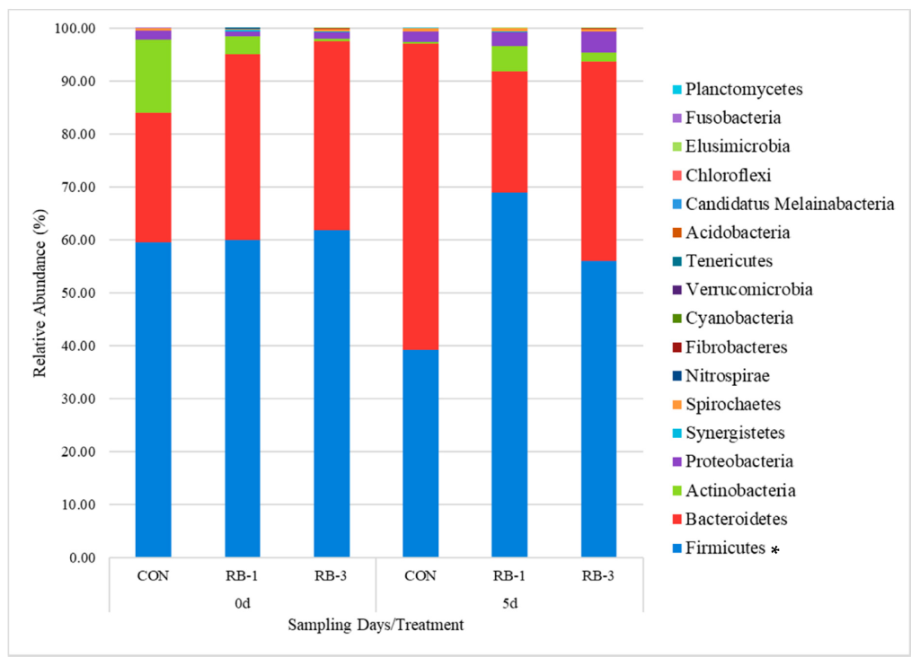
Figure 1: Changes in Bacterial Phyla
The genus composition analysis in this study revealed that out of 218 identified bacterial species in the rumen fluid, only 23 species showed significant changes in response to dietary treatments. Among these genera, Ruminococcus and Prevotella were identified as the dominant genera (as shown in Figures 2 and 3). Ruminococcus is a well-known cellulolytic bacterium, playing a key role in the digestion of plant fibers. Notably, the species Ruminococcus bromii is known for its high capacity to ferment starch. Therefore, an increase in the abundance of Ruminococcus may indicate enhanced starch digestion during the experiment. In contrast, Prevotella is a genus capable of utilizing a wide range of substrates, including proteins, peptides, and certain carbohydrates. As a result, this genus often shows high abundance in diets rich in concentrates and diverse nutrients. Thus, the shift in the ratio of these two genera can serve as an important indicator of ruminal fermentation conditions and microbial responses to buffer-containing diets.
The higher relative abundance of Mangroviflexus in the CON (control) group may be attributed to this genus's ability to utilize starch as its sole carbon and nitrogen source. Furthermore, elevated concentrations of acetate and propionate in the rumen fermentation samples of dairy cows suggest that Mangroviflexus xiamensis is a major producer of acetate, propionate, and succinate in the rumen. Prevotella ruminicola is considered one of the most abundant species found in the rumen and typically plays a critical role in the degradation of polysaccharides in high-concentrate diets. On day 0, this genus showed higher abundance in the RB-1 treatment compared to other treatments. However, after 5 days of feeding, its abundance decreased in the RB-1 group relative to the control. Similarly, the high abundance of Prevotella jejuni in the CON group on day 5 may reflect this genus's capacity for increased glucose fermentation and its functional role as a saccharolytic bacterium.
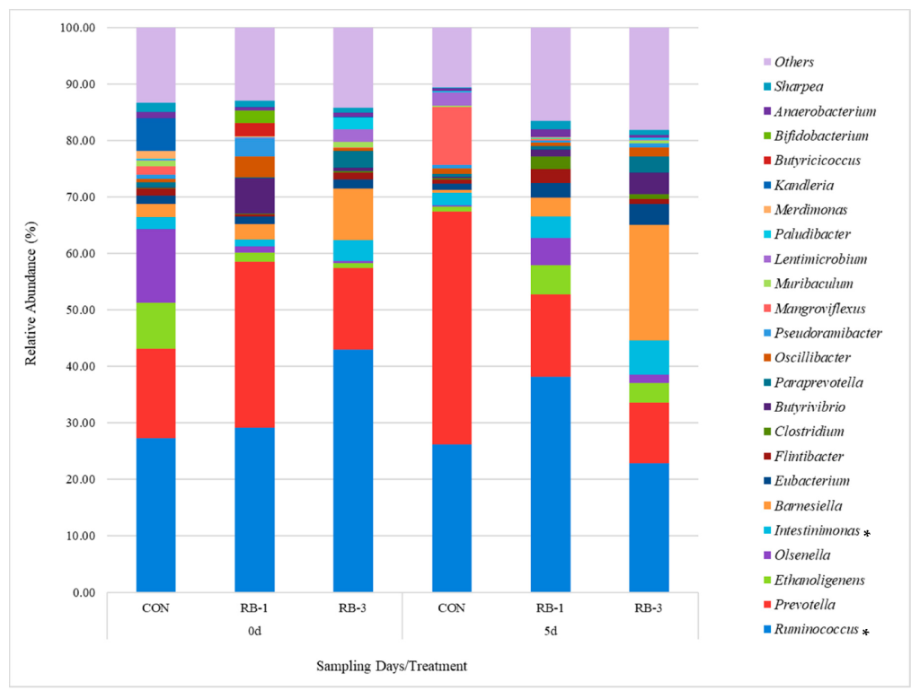
Figure 2: Species-level changes due to dietary treatments over the 5-day trial period
In this study, it was shown that feeding RB in the diet for 5 days was associated with increased ruminal acetate levels, alongside higher relative abundance of Barnesiella intestinihominis and Ethanoligenens harbinense. This supports the notion that Ethanoligenens harbinense and Barnesiella intestinihominis produce acetate as one of their key metabolic end products. In line with this observation, previous reports indicate that Ethanoligenens harbinense is capable of fermenting various monosaccharides, disaccharides, and oligosaccharides into acetate, ethanol, hydrogen, and carbon dioxide. In addition to acetate levels, the observed increase in the relative abundance of Intestinimonas butyriciproducens as a result of RB feeding may have contributed to the elevated concentration of butyrate detected in the rumen fluid.
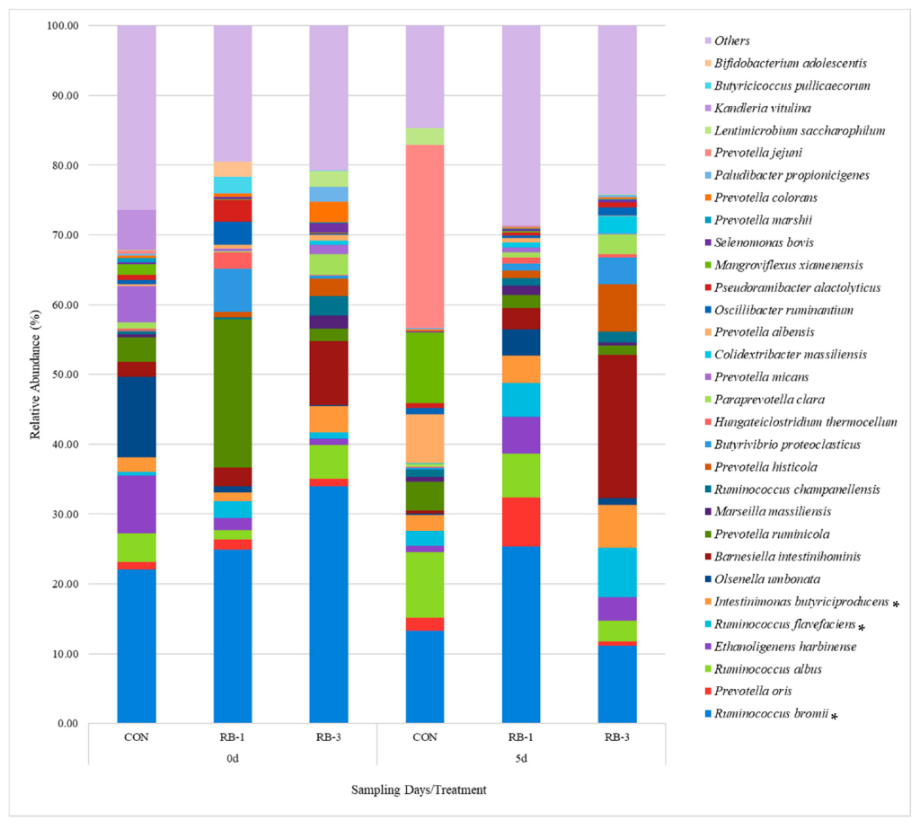
Figure 3: Changes in genera due to treatment feeding over the 5-day experimental period.
Conclusions:
Ruminal microbes have a unique ability to convert carbohydrates into short-chain fatty acids at a rate that can exceed the absorption capacity, buffering ability, and passage rate of the rumen, causing a sudden drop in ruminal pH. A shift from a stable rumen condition to an acidic state due to excessive feeding of rapidly fermentable carbohydrates can reduce the diversity and abundance of the ruminal microbial population. Given that changes in the abundance and diversity of rumen microbes are linked to the animal’s health status, feeding buffering agents and antacids is necessary to maintain greater stability in the digestive system and rumen.
REFERENCES:
https://doi.org/۱۰.۳۳۹۰/agriculture۱۱۰۶۰۵۵۴
Ramos, S., et al., Enhanced Ruminal Fermentation Parameters and Altered Rumen Bacterial Community Composition by Formulated Rumen Buffer Agents Fed to Dairy Cows with a High-Concentrate Diet. Agriculture, ۲۰۲۱. ۱۱: p. ۵۵۴